CBD Oil vs Hemp Oil: Which Should You Choose?
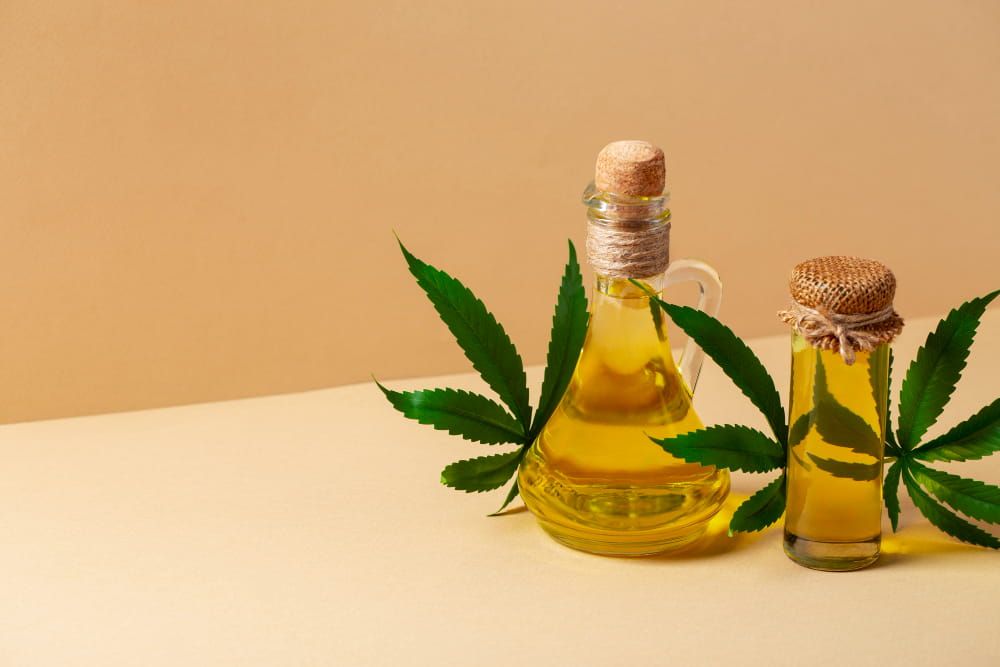
CBD oil and hemp oil are two different products, and the difference matters more than most labels admit. CBD oil is an extract from the flowers and leaves of the cannabis plant, and it contains cannabidiol. Hemp oil — properly called hemp seed oil — is pressed from the seeds, and it contains almost no cannabidiol at all.
That single difference changes what you should expect from each one. One is a food. The other is a wellness product with an active compound in it. Below is how they're made, what's actually inside them, what the research supports, and how to pick the right one without paying for the wrong thing.
What is the difference between CBD oil and hemp oil?
The difference is the part of the plant used. CBD oil comes from the flowers, leaves and stalks. Hemp seed oil comes only from the seeds, which naturally hold barely any cannabinoids.
| Hemp seed oil | CBD oil |
| Plant part | Seeds only | Flowers, leaves, biomass |
| How it's made | Cold-pressed, like sunflower oil | Solvent extraction (CO2 or ethanol), then diluted in a carrier |
| Main content | Fats — omega-6 and omega-3 | Cannabidiol, sometimes other cannabinoids |
| CBD content | Trace amounts only | The whole point of the product |
| Typical use | Cooking, salad dressing, skincare | Sleep, stress, discomfort |
| Label name | Cannabis sativa seed oil, hempseed oil | Cannabidiol, CBD extract |
The US state of Vermont's hemp programme puts the technical line plainly: hemp seed oil "generally contains no more than trace amounts of cannabinoids," while CBD concentrate "primarily consists of cannabinoids at the end of the extraction process."
Takeaway: If a label says "hemp seed oil" or "cannabis sativa seed oil," you're buying a food oil. If it says CBD or cannabidiol with a milligram number, you're buying an extract.
How is each oil made?
Extraction is where the two products separate completely. They don't share a process, a raw material, or a purpose.
How is hemp seed oil pressed?
Hemp seeds go through mechanical cold pressing — the same method used for olive or sunflower oil. No solvents, no heat that would damage the fats. What comes out is a green, nutty oil with a low smoke point, best used raw.
Because the seeds themselves carry almost no cannabinoids, nothing needs to be removed or concentrated. The oil is simply pressed and filtered.
How is CBD oil extracted?
CBD extraction starts with flower and leaf material. Producers use supercritical CO2, ethanol, or a lipid-based method to pull the cannabinoids out, then refine the result and dilute it into a carrier oil — usually MCT (coconut-derived) or hemp seed oil.
That last part is where the confusion begins. Many CBD oils use hemp seed oil as the carrier, which is why "hemp" appears on bottles that are really CBD products, and on bottles that really aren't.
What do full spectrum, broad spectrum and isolate mean?
These three words describe how much of the plant survived refining.
Full spectrum — CBD plus other cannabinoids and terpenes, including trace THC within the legal limit.
- Broad spectrum — the same range, with THC removed.
Isolate — purified CBD only, nothing else.
Takeaway: Cold pressing makes a food. Solvent extraction makes an active product. The word "hemp" on a bottle tells you nothing about which one you're holding.
What's actually inside each oil?
Hemp seed oil is a fat. CBD oil is a delivery system for a compound. Their nutritional profiles aren't comparable because they aren't doing the same job.
Analysis published in the Journal of Nutraceuticals, Functional & Medical Foods found hemp seed oil is roughly 75% polyunsaturated fat, with linoleic acid (omega-6) at 52–62%, alpha-linolenic acid (omega-3) at 12–23%, and gamma-linolenic acid at 3–4%. That works out to an omega-6 to omega-3 ratio of about 3:1 — close to what nutritionists generally recommend, and better than most vegetable oils sold in Thai supermarkets.
Cannabidiol is measured differently. You'll see a total milligram figure on the bottle — 300 mg, 1,500 mg, 3,000 mg — spread across the whole container. A 30 ml bottle of 1,500 mg oil holds about 50 mg per millilitre, which is what you divide down to get a dose.
Takeaway: Judge hemp seed oil on its fat profile. Judge a cannabidiol extract on milligrams per bottle and what a single serving delivers.
Which one is better for daily wellness?
It depends on what you want the oil to do — and the honest answer is that hemp seed oil has the more settled evidence behind it, while CBD has the more interesting one.
What is hemp seed oil good for?
Hemp seed oil is food. Its value is nutritional: a well-balanced source of essential fatty acids you can pour over a salad, blend into a dressing, or use on skin as an emollient. It won't help you sleep, and any brand suggesting otherwise is selling you a story.
Keep it in the fridge and don't cook with it. Those polyunsaturated fats oxidise quickly under heat.
What does the research say about CBD?
A 2024 systematic review in Pharmaceuticals examined 40 studies on CBD and pain, including 11 human clinical trials. Seven of those 11 found pain-reducing effects, and the authors noted that most of the higher-quality trials reported benefit. They also concluded that "clinical evidence is limited, and more studies should be performed."
For anxiety, a 2024 review in Life pooled 15 randomised controlled trials covering 673 participants. According to its findings, the effects were clearest for public-speaking anxiety at around 300 mg, and higher doses of 600 mg sometimes increased anxiety rather than reducing it.
So CBD isn't a placebo, but it also isn't a guaranteed result. More is not better, and the dose that works for one person may do nothing for another.
Takeaway: Buy hemp seed oil for nutrition. Buy a cannabidiol extract if you want to test it for sleep, stress or discomfort — starting low.
Is CBD oil legal in Thailand?
Yes, with conditions. CBD extracts containing no more than 0.2% THC, produced from plants grown in Thailand under a Thai FDA licence, are deregulated — they can be sold and bought without a prescription.
Two things narrow that, and both are recent. Cannabis flower became prescription-only under the Ministry of Public Health's Notification on Controlled Herbs (Cannabis) in June 2025, and Ministerial Regulation No. 2 B.E. 2569, published on 30 April 2026, tightened licensing further so that flower sales must sit inside a medical or pharmacy setting. Consumer CBD products weren't caught by those changes, but the walk-in dispensary era ended with them.
The second condition matters for anyone shopping online: importing CBD products into Thailand is still prohibited. A cannabidiol product legally sold here has to be made here, from Thai-grown material, by a licensed producer. An overseas brand shipping to a Bangkok address is not operating within Thai law, whatever its own website says.
Takeaway: Thai-made, Thai FDA-registered, under 0.2% THC. If a product can't show all three, it isn't legally on sale in Thailand.
How do you avoid buying the wrong product?
Read the label like a sceptic, because the category has a documented accuracy problem. When researchers at the University of Pennsylvania tested 84 CBD products from 31 companies for a study published in JAMA in 2017, nearly 70% were mislabelled — about 43% contained more CBD than stated and 26% contained less. Only 30% were within 10% of their label claim.
Four checks before you buy:
- Look for a milligram figure. A real extract states its total cannabidiol content. "Hemp extract" with no number is a red flag.
- Check the ingredient name. "Cannabis sativa seed oil" is hemp seed oil. If that's the only cannabis-related ingredient listed, there's no CBD in the bottle.
- Ask for the Thai FDA registration. Legitimate Thai products carry one.
- Ask for a lab report. A certificate of analysis should confirm both CBD content and that THC sits under 0.2%.
Takeaway: Milligrams, ingredient name, FDA registration, lab report. A brand that can't produce all four hasn't earned your money.
How does HappyLyfe verify CBD products?
Every brand we list is checked against our six sensitivities — Organic, Cruelty-free, Free-range, Artisanal, Fair-trade and Recycled — before it reaches the shelf. For CBD specifically, that means confirming the product is made in Thailand from licensed material, that the THC figure is documented rather than asserted, and that the milligram claim on the label is backed by a lab report we've seen.
When a vendor can't evidence a claim, the product doesn't get listed. That's the whole reason HappyLyfe exists as a curated marketplace rather than an open one — in a category with a 70% mislabelling record, someone has to read the paperwork.
Takeaway: Curation is the product. You're buying the checking as much as the oil.
How to pick the right CBD oil at HappyLyfe
Start with what you want it for, not with strength. Our CBD collection is organised by purpose for exactly this reason.
Completely new to it? Start in New to C|B|D with a small bottle. The Purserix 300 mg Natural Flavour 10 ml (550฿) or the Auracl Full Spectrum To-Go 300 mg (690฿) let you test tolerance without committing 3,000 baht.
- Sleep. Calm / Relax / Sleep holds the Midnight CBD Oil 600 mg (639฿), the SEYA Broad Spectrum Better Sleep 1500 mg (1,799฿) and the Auracl Night CBN + CBD (1,990฿).
- Stress and anxiety. Stress & Anxiety runs from the SEYA Anti Stress (499฿) at the low-commitment end to the Auracl Full Spectrum 3,000 mg (3,090฿) at the other. If you'd rather avoid THC altogether, ask us for a broad spectrum or isolate — both have it stripped out.
- Aches and recovery. Pain Management and Topical cover both routes: the SEYA Relief Extra Strong 3,000 mg (3,299฿) taken sublingually, or the Cannopi CBD Vital Body Balm (540฿) and Soothing Oil Roller (192฿) applied where it hurts.
Prefer not to taste it. Edibles has the Diip Sleep, Morning and Immunity Gummies at 290฿ per pack.
On dose: start at 5–10 mg and hold there for several days before increasing.
One honest note — HappyLyfe stocks CBD oil, not culinary hemp seed oil. If nutrition is what you're after, that's a grocery purchase, and we'd rather tell you than sell you a CBD product for a job it doesn't do.
Takeaway: Choose by purpose first, strength second, and start lower than you think you need.
Frequently asked questions
What is the difference between CBD oil and hemp oil?
CBD oil is extracted from the flowers and leaves of the cannabis plant and contains cannabidiol. Hemp oil, or hemp seed oil, is cold-pressed from the seeds and contains only trace cannabinoids. The extract is used for sleep, stress and discomfort. The seed oil is a food and skincare oil valued for its omega-3 and omega-6 content.
Does hemp seed oil contain CBD?
No, not in any meaningful amount. Hemp seeds carry only trace cannabinoids, usually picked up from contact with the plant during harvest. If a bottle lists "cannabis sativa seed oil" as its only hemp ingredient and gives no milligram figure, it contains no usable CBD.
Is CBD oil legal in Thailand in 2026?
Yes, within limits. CBD extracts with no more than 0.2% THC, made from Thai-grown plants under a Thai FDA licence, can be sold without a prescription. Cannabis flower is prescription-only following the 2025 controlled herbs notification. Importing CBD products into Thailand remains prohibited.
Where can I buy CBD oil in Thailand?
HappyLyfe stocks Thai-made, FDA-registered CBD oils at happylyfe.in.th/cbd, organised by what you need them for — sleep, stress, pain or topical use. Every brand is checked against our six sensitivities and asked to evidence its THC and CBD figures before listing.
Will CBD oil make me high?
No. CBD is not intoxicating, and legal Thai products cap THC at 0.2% — far below the level that produces psychoactive effects. If you want to remove the question entirely, choose a broad spectrum or isolate product, both of which have THC stripped out.
Can I use hemp seed oil on my skin?
Yes. The pressed seed oil is a light, non-comedogenic emollient that absorbs well and suits most skin types, which is why it appears in many natural moisturisers. It won't deliver CBD's effects, though — for that you need a product with a stated cannabidiol content.
The short version
CBD oil and hemp oil share a plant and almost nothing else.
Hemp seed oil is pressed from seeds. It's a nutritious food oil, roughly 75% polyunsaturated fat with a 3:1 omega-6 to omega-3 ratio, and it contains no meaningful CBD.
- CBD oil is extracted from flowers and leaves. It's an active product with a milligram dose, used for sleep, stress and discomfort.
- The evidence for CBD is promising but unsettled, and higher doses aren't automatically better.
- In Thailand, legal CBD means Thai-made, FDA-registered and under 0.2% THC. Imports are not permitted.
Roughly 70% of CBD products tested in one study were mislabelled, so verification isn't optional.
If you've decided CBD is what you're after, browse the HappyLyfe C|B|D collection — every product is Thai-made, checked against our six sensitivities, and sorted by what you actually want it to do.
Read next: CBD Oil in Thailand: Benefits, Uses and How It Works