What Is Kefir Milk? A Simple Guide to Milk Kefir and Why It's Trending
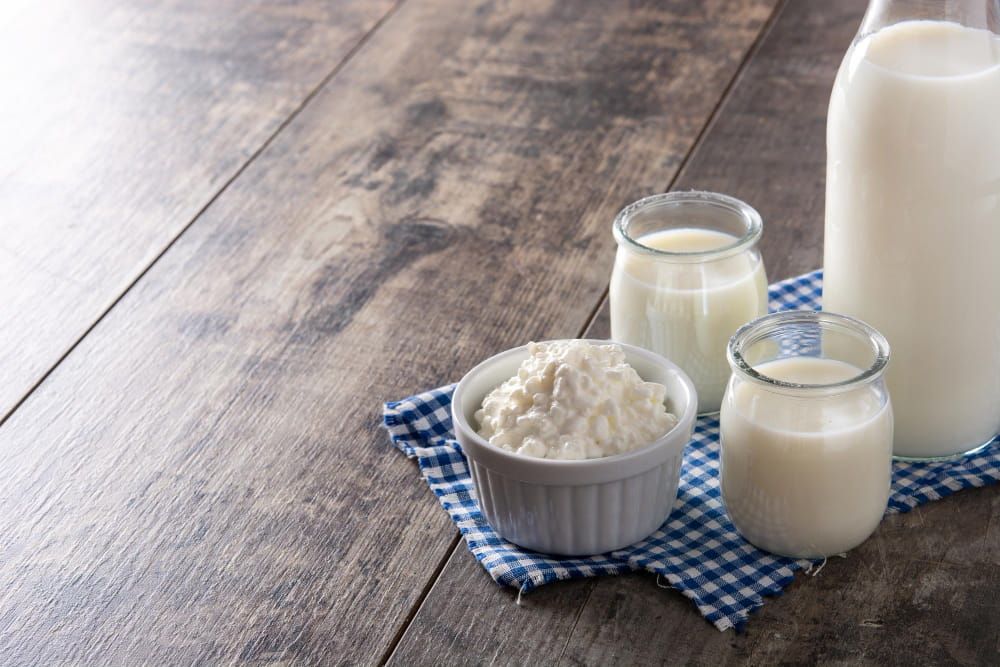
Kefir milk is a tangy, drinkable fermented dairy beverage made by adding kefir grains — small, cauliflower-like clusters of bacteria and yeast — to fresh milk and letting them ferment for about 24 hours. The result is slightly fizzy, mildly sour, and carries far more live cultures than most yogurts.
It's trending because gut health has moved from niche wellness topic to mainstream concern, and this is one of the easiest ways to get live probiotics into your day.
If you've noticed it appearing in Bangkok grocery aisles and on your feed lately, you're not imagining it. Online conversations about kefir rose 16% year-on-year, and global food and drink launches carrying gut-health claims jumped 42%, according to SFI Health's 2026 trend analysis.
Here's what it actually is, what the research supports, and where the hype outruns the evidence.
What is kefir milk?
Kefir milk is milk fermented with kefir grains, producing a pourable drink somewhere between drinking yogurt and buttermilk in texture. The terms "kefir milk" and "milk kefir" describe the same product — the dairy version, as opposed to water kefir, which ferments in sugar water and contains no dairy.
The grains aren't grains in the cereal sense. They're gelatinous white clusters, 0.3 to 3.5 cm across, made of bacteria and yeast living inside a polysaccharide matrix called kefiran, according to a review in Frontiers in Microbiology.
Those grains are reusable. Strain them out, drop them into fresh milk, and they ferment the next batch.
Takeaway: This is fermented milk, and the two name variations mean the same drink. The grains are a living culture you keep, not an ingredient you use up.
How is milk kefir made?
Milk kefir is made by adding grains to milk, fermenting at room temperature for roughly 24 -48 hours, then straining the grains out. During that window the bacteria and yeast consume lactose and produce lactic acid, carbon dioxide, and trace alcohol — which is where the tang and the slight fizz come from.
What lives inside kefir grains?
The grains host a mixed community of bacteria and yeast working together. The Frontiers review identifies the dominant players:
- Lactobacillus kefiri — roughly 80% of the lactobacilli in the finished drink
- Lactobacillus kefiranofaciens — produces the kefiran holding the grains together
- Lactococcus lactis and Lactobacillus paracasei — lactic acid producers
- Saccharomyces cerevisiae and Kluyveromyces marxianus — yeasts that consume lactose and produce the fizz
That bacteria-plus-yeast partnership is what separates this drink from yogurt. Yogurt is bacteria only.
How many probiotics does kefir milk contain?
The grains carry roughly 10⁸ colony-forming units of lactic acid bacteria per gram, plus 10⁶–10⁷ CFU of yeast, per the same review. In commercial terms, Healthline reports around 12 live cultures and 15–20 billion CFU per serving, against one to five cultures and about 6 billion CFU in yogurt.
Worth saying plainly: CFU counts vary enormously between brands and batches. A homemade jar and a supermarket bottle are not the same product, and neither carries a guaranteed number.
Takeaway: Fermentation takes about a day and produces both bacteria and yeast — typically several times more diverse than yogurt.
How is kefir milk different from regular milk?
Nutritionally, the two are close cousins. The meaningful difference isn't calories or calcium — it's the live cultures and the reduced lactose.
Here's the per-100 g comparison of low-fat kefir against low-fat milk, via Foodstruct's USDA-based data:
| Per 100 g | Kefir | Milk |
|---|---|---|
| Calories | 41 kcal | 42 kcal |
| Protein | 3.79 g | 3.37 g |
| Carbohydrate | 4.48 g | 4.99 g |
| Sugar | 4.61 g | 5.2 g |
| Calcium | 130 mg | 125 mg |
| Phosphorus | 105 mg | 95 mg |
| Vitamin B12 | 0.29 µg | 0.47 µg |
Fermentation edges the drink ahead on protein, calcium, and phosphorus. Milk actually comes out ahead on B12 and riboflavin.
If you're switching over expecting a dramatic nutritional upgrade, the macros won't deliver it. The case rests almost entirely on digestion and live cultures.
Why is kefir easier to digest than milk?
The yeasts consume lactose during fermentation, and the cultures supply enzymes that keep breaking lactose down in your gut. That matters more in Thailand than it does in Europe.
A randomised study published in the Journal of the American Dietetic Association tested five lactose-containing meals in adults with lactose maldigestion. Breath hydrogen — the standard marker of undigested lactose — measured 224 ppm×h after milk versus 87 ppm×h after the plain fermented version. Perceived flatulence severity fell by 54% to 71%.
Lactose malabsorption is common across Asia. In a Mahidol University study of Thai adults aged 21–31, 47% were malabsorbers who experienced symptoms after a 25 g lactose dose.
Takeaway: Nutritionally this isn't a dramatic upgrade on milk. The real advantage is live cultures plus markedly better tolerance for people who struggle with dairy.
Why is milk kefir trending right now?
Milk kefir is trending because gut health went mainstream and this drink sits at the intersection of three things buyers currently want: live probiotics, minimal processing, and a short ingredient list.
Three forces are driving it:
- Microbiome awareness. Sixty percent of consumers now rate gut health as "really important" to overall wellness, per SFI Health.
- Market momentum. Mordor Intelligence values the global market at USD 1.99 billion in 2026, forecast to reach USD 3.01 billion by 2031 — an 8.63% CAGR, with Asia-Pacific growing fastest at 9.66%.
- Clean-label preference. The ingredient list is milk plus culture. In a category crowded with additives, that simplicity sells itself.
There's a quieter reason too: it's one of the few functional foods you can genuinely make at home for the price of a litre of milk.
Takeaway: The trend is backed by market data, not just social media enthusiasm — though the two feed each other.
How do people enjoy kefir milk in Thailand?
In Thailand it's usually drunk plain, blended into fruit smoothies, or used as a base for dressings and marinades. Thai fruit does a lot of the work — the sourness needs sweetness to balance it, and there's no shortage here.
If you're starting out, a plain bottle is the most versatile buy. Flavoured versions are easier to drink straight but less useful in cooking, and they usually carry added sugar.
Five ways worth trying:
- Nam dok mai mango smoothie — blended with ripe mango and a squeeze of lime. The tang cuts the sweetness better than yogurt does.
- Overnight oats — swapped in for regular milk, with coconut sugar and sliced banana.
- Green mango salad dressing — whisked with fish sauce, lime, chilli, and a pinch of sugar. Unconventional, and it works.
- Marinade for grilled chicken — the lactic acid tenderises meat the way buttermilk does in fried chicken.
- Chilled, plain, with a spoon of honey — the simplest entry point if the sourness is new to you.
Thailand is not new to fermentation, which is part of why this lands so easily. Pla ra, som pak, and sai krok Isan are all fermented staples. A cultured dairy drink is a cousin of a food tradition Thai kitchens have practised for generations.
Where can you buy kefir milk in Thailand?
You can buy kefir milk in Thailand through HappyLyfe's kefir range, which stocks both plain and flavoured varieties from small local producers, delivered chilled. Supermarket options exist but are limited, and shelf-stable imports are common — which is a problem, as you'll see below.
Whoever you buy from, three things are worth checking:
- "Live and active cultures" on the label — shelf-stable products have usually been heat-treated, which kills the very thing you're paying for
- A refrigerated supply chain — from producer to your door, not just the final shelf
- A short ingredient list — milk and cultures, ideally nothing else
Home fermenters also sell grains through Facebook groups, which works well if you want to make your own. Just be aware you're buying a live culture from an unverified source.
How does HappyLyfe verify its kefir producers?
Every kefir vendor on HappyLyfe is checked against our six sensitivities — Organic, Cruelty-free, Free-range, Artisanal, Fair-trade, and Recycled — before their products go live on the platform.
For fermented dairy specifically, that means asking producers to substantiate what they claim: where the milk comes from, how the animals are kept, and whether the cultures are live at the point of delivery. We don't take a claim at face value because it appears on a label.
This is the part of shopping for live products that's genuinely hard to do yourself. You can read an ingredient list, but you can't verify a dairy's animal welfare practices from your kitchen.
Takeaway: Live cultures only benefit you if they arrive alive. Buy chilled, from a named producer, through a source that has actually checked the claims.
Can you make kefir milk at home in Thai heat?
Yes, but the climate changes the timing. Kefirko notes that the dairy ferment works best at 22–24°C. At Bangkok room temperature, fermentation runs faster and can tip into unpleasantly sour or off-tasting territory, with a higher mold risk in humid conditions.
The practical fix: use the coolest, darkest cupboard you have, start tasting at 12–16 hours rather than 24, and keep the jar well covered.
Takeaway: It adapts easily to Thai flavours and Thai kitchens — you just have to shorten the ferment.
Who should be cautious with kefir milk?
This isn't right for everyone, and it's worth being honest about that. Anyone immunocompromised should speak to a doctor before adding live cultures to their diet. Anyone with a milk protein allergy — which is different from lactose intolerance — should avoid the dairy version entirely and look at water or coconut alternatives.
Expectations on health claims deserve managing too. The 2016 Frontiers in Microbiology review found strong cholesterol-lowering effects in animal studies, but a human trial in mildly hypercholesterolaemic men found no significant cholesterol change over four weeks. Much of what circulates online extrapolates from animal research.
And start small. A large glass of an unfamiliar live culture on day one is a common way to end up uncomfortable. Half a cup is plenty to begin with.
Takeaway: Most people tolerate it well, but the human evidence for specific health outcomes is thinner than the marketing suggests.
Frequently asked questions
Is kefir better than yogurt?
Kefir carries more probiotic diversity — roughly 12 live cultures and 15–20 billion CFU per serving, against one to five cultures and around 6 billion in yogurt. It also contains yeast, which yogurt doesn't. Nutritionally the two are similar, so "better" depends on your goal. For probiotic variety, kefir wins. For thick, spoonable texture, yogurt wins.
Can lactose intolerant people drink kefir milk?
Most can. Fermentation reduces lactose, and the cultures help digest what remains. In a randomised study of adults with lactose maldigestion, the plain fermented drink produced roughly 60% less breath hydrogen than milk and reduced flatulence severity by 54–71%. It is not lactose-free, so anyone with severe intolerance should still start with a small amount.
How much should you drink a day?
There's no established optimal dose. Most regular drinkers have between half a cup and one cup daily. If fermented foods are new to you, start with 50–100 ml and build up over a week or two — a sudden increase in live cultures can cause temporary bloating or gas.
Does it contain alcohol?
Yes, in trace amounts. The yeasts produce small quantities of ethanol alongside carbon dioxide, which is what creates the light fizz. Levels stay low and vary with fermentation time and temperature — longer, warmer ferments produce more. Commercial bottles are sold as non-alcoholic beverages.
What's the difference between milk kefir and water kefir?
Milk kefir ferments in dairy using dairy-adapted grains and tastes tangy and creamy. Water kefir ferments in sugar water using different grains, contains no dairy, and tastes lighter, closer to a soft soda. The two grain types are not interchangeable — each is adapted to its own medium.
How long do kefir grains last?
Indefinitely, with regular feeding. Healthy grains multiply over time, which is why fermenters give them away. Fed fresh milk every 24 hours and kept out of extreme heat, a single set can produce daily batches for years.
Where can I buy kefir milk in Thailand?
HappyLyfe stocks kefir from small local producers in both plain and flavoured varieties, delivered chilled so the cultures stay live. Every vendor is verified against our six sensitivities before listing. Supermarket availability in Thailand is limited, and many imported options are shelf-stable — meaning heat-treated, with the live cultures destroyed.
The bottom line on kefir milk
Kefir milk is fermented dairy carrying a live culture of bacteria and yeast, made by fermenting grains in milk for about 24 hours. What's worth remembering:
- "Kefir milk" and "milk kefir" describe the same tangy, slightly fizzy drink.
- Its nutrition sits close to regular milk — the difference is live cultures and reduced lactose.
- Better lactose digestion has solid human trial data behind it.
- Broader health claims are mostly extrapolated from animal studies.
- Buy it chilled from a named producer, or the live cultures won't reach you alive.
Curious enough to try it? Start with a plain bottle rather than committing to grains. Browse HappyLyfe's kefir range — every producer we list has been verified against our six sensitivities, and everything ships chilled so the cultures arrive live.
Read next: Understanding HappyLyfe's Six Sensitivities: How We Verify Every Product