Where to Buy Premium Dried Mango Online in Thailand
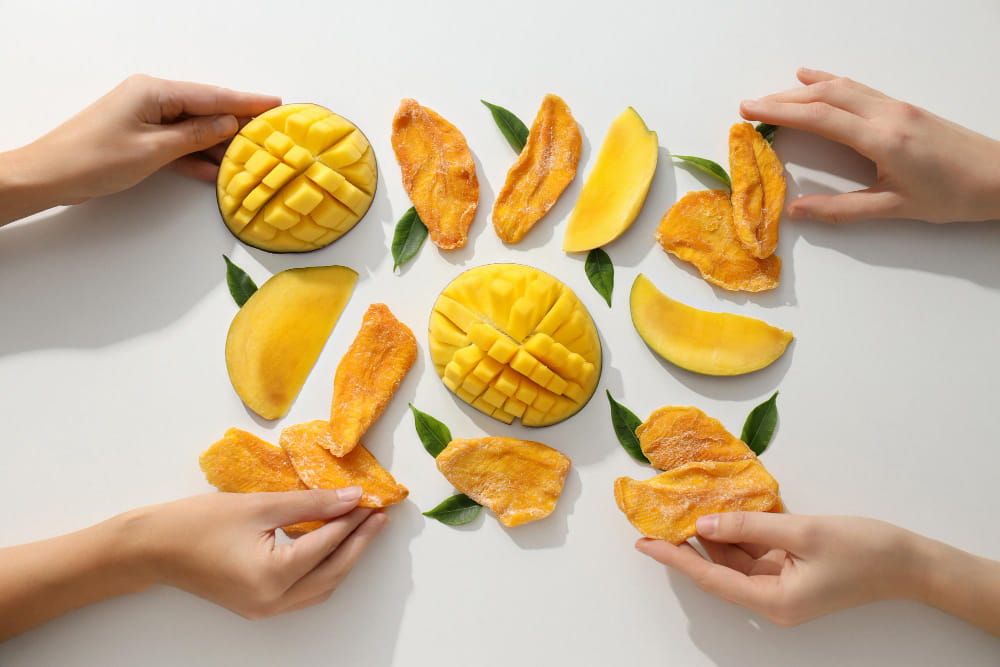
Premium dried mango in Thailand comes down to three things: a traceable farm origin, a drying process that preserves texture and flavor without needing to hide behind added color, and a seller who can show you the paperwork rather than just claim quality on the label. Thailand grows some of the best mango in the world, which makes it an easy country to find dried mango in – and a surprisingly easy one to end up with a mediocre bag anyway.
The difference between a forgettable snack and a genuinely good one is almost always upstream, at the farm and in the drying method, not in the packaging.
Here's what actually separates premium dried mango from the rest, and where to find it online in Thailand.
What makes a source trustworthy for buying premium dried mango in Thailand?
A trustworthy source for dried mango is one that can tell you exactly where the fruit was grown, shows lab or safety certification rather than just claiming it, and doesn't need artificial color or a long ingredient list to make the product look appealing.
Why does farm traceability matter?
Traceability tells you two things a label alone can't: whether the fruit was grown to organic standards, and whether the grower has a reason to protect their reputation batch after batch. A dried mango sold under a generic house brand with no named farm gives you neither. One grown and dried by a named producer – with a specific region attached – gives you both.
What certification should you actually look for?
Look for lab safety testing (confirming the product meets hygiene and microbial safety standards) and, where relevant, HALAL certification if that matters to your household. These aren't marketing badges – they're independently issued documents a seller can show you, not just mention.
Takeaway: A trustworthy source names its farm, shows its certificates, and doesn't hide behind vague claims like "natural" or "premium" with nothing behind them.
How do you identify high-quality dried mango?
High-quality dried mango has a natural golden-amber color, a texture that's pliable and chewy rather than rock-hard or sticky-wet, and a genuine mango aroma rather than a purely sweet one.
What does the color actually tell you?
Color is one of the fastest quality checks available. Naturally dried mango ranges from golden amber to a slightly deeper brownish-orange, depending on the variety and how it was dried – a bit of caramelization at the edges is normal, not a flaw. A bag of dried mango that looks uniformly bright, almost neon orange, is worth a second look, since that level of visual consistency across every piece isn't how fruit naturally dries.
What texture should you expect?
Premium dried mango sits in a specific middle ground: pliable enough to bite through easily, chewy without being tough, and never sticky-wet or brittle-hard. Optimal moisture content for dried mango sits around 15–20% – too little and the fruit turns leathery, too much and it's prone to spoiling faster than it should.
Does the drying method matter?
Genuinely, yes. Sun-drying and hot-air dehydration both concentrate the fruit's natural sugars and produce the classic chewy texture, though heat-based drying can degrade some of the more heat-sensitive vitamins along the way. What matters most in practice is consistency – the same texture and color from piece to piece within a bag signals a controlled process, not a rushed one.
What's actually in dried mango nutritionally?
Per 100g, unsweetened dried mango carries roughly 314 kcal, 42mg of vitamin C, 279mg of potassium, and 1.2mg of iron, according to USDA FoodData Central. It's calorie-dense compared to fresh mango simply because the water's gone and the sugars are concentrated – worth knowing if you're snacking on it by the handful rather than by the piece.
Takeaway: Judge dried mango by color, texture, and consistency across the bag – not just by how the package markets it.
What dried mango does HappyLyfe stock, and how does delivery work?
HappyLyfe currently stocks one dried mango, and it's a genuinely traceable one: Fairlane Organic Dried Mango (89฿ per 100g), grown on Fairlane's own organic farmland in Chiang Rai, northern Thailand.
A few things worth knowing before you buy:
● The fruit is farm-traceable. Fairlane grows and harvests the mango themselves in Chiang Rai rather than sourcing it from an unnamed supplier, and describes the region's farmers as the ones who have cared for that land across generations.
● It's gently dehydrated with no added water, which is what concentrates the natural sugars and nutrients rather than diluting the final product.
● It carries documented certification – both an SGS/GHP hygiene and safety certificate and a HALAL certificate are published directly on the product listing, not just claimed in the description.
How does HappyLyfe verify a producer like Fairlane Organic?
Every product on HappyLyfe, dried mango included, is checked against our six sensitivities – Organic, Cruelty-free, Free-range, Artisanal, Fair-trade, and Recycled – before it goes live. For a farm-direct product like this, that means confirming the Chiang Rai origin and organic growing claims hold up, not just taking the label at its word.
Takeaway: One product, but a genuinely well-documented one – a named farm, a real certificate, and no filler ingredients.
Frequently asked questions
Where can I buy premium dried mango in Thailand?
HappyLyfe stocks Fairlane Organic Dried Mango (89฿/100g), grown and harvested on Fairlane's own organic farm in Chiang Rai. The product listing includes published SGS/GHP and HALAL certificates, and orders require a minimum of three packs.
How do I know if dried mango is high quality?
Check the color first – natural dried mango is golden to amber, not uniformly neon orange. Check the texture next – it should be pliable and chewy, not rock-hard or sticky. Consistency across the bag and a traceable farm origin are the other two signals worth checking.
Is dried mango healthy?
In moderation, yes. It carries meaningful vitamin C, potassium, and fiber, but it's also calorie-dense since drying concentrates the fruit's natural sugars. A small handful is a reasonable snack; eating it by the bagful adds up quickly on calories.
What's the difference between sun-dried and dehydrated mango?
Both concentrate natural sugars and produce a similar chewy texture. Sun-drying tends to darken the fruit slightly through natural caramelization, while controlled dehydration can produce a more consistent color batch to batch. Neither method is inherently better – consistency and sourcing matter more than which specific method was used.
How should I store dried mango?
Keep it in an airtight container in a cool, dry place. Properly dried mango doesn't need refrigeration, though chilling it can extend shelf life slightly if you're not finishing the bag quickly.
Can I buy dried mango in bulk on HappyLyfe?
Yes, you can reach out to HappyLyfe for a bulk pricing and minimum order quantity proposal.
The bottom line on buying premium dried mango in Thailand
The best dried mango comes from a source that can show you where it grew and how it was made, not just tell you that it's premium.
● Farm traceability and real certification matter more than packaging claims.
● Judge quality by color and texture: golden-amber and pliably chewy, not neon-bright or rock-hard.
● Dried mango is nutrient-rich but calorie-dense – a snack for moderation, not the whole bag.
● HappyLyfe's Fairlane Organic Dried Mango is grown and dried on a named Chiang Rai farm, with published safety and HALAL certificates.
● Orders require a minimum of three packs at checkout.
Ready to try it? Shop Fairlane Organic Dried Mango on HappyLyfe – grown on their own Chiang Rai farm, certified, and genuinely traceable back to the source.